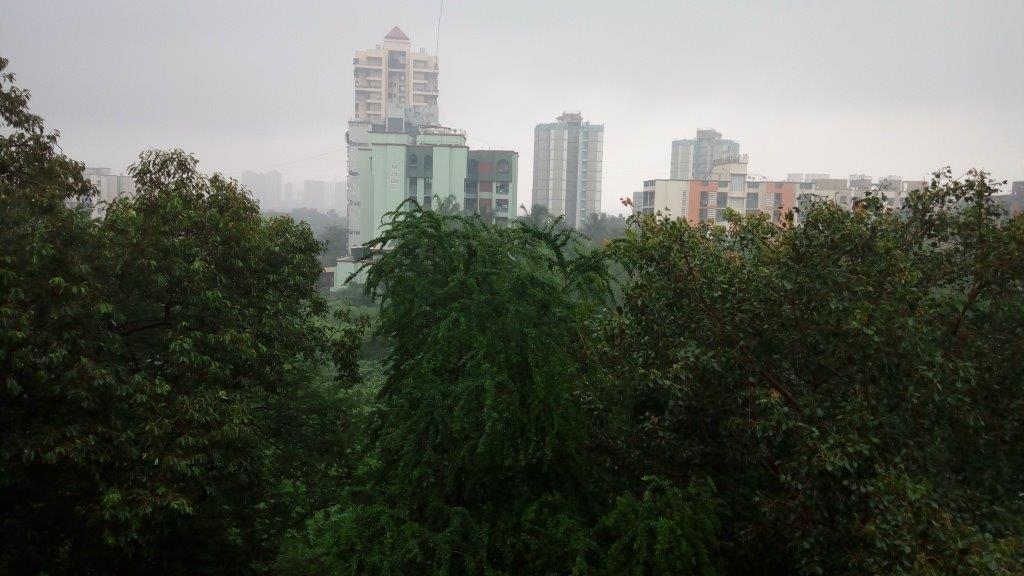
One can take man out of nature, but man cannot live without nature..
Consider some of decisions taken by the Indian government in precipitating the problems and hastening the destruction of natural resources.
CRZ Notification: The cabinet recently approved the Coastal Regulation Zone (CRZ) Notification 2018, ostensibly to create more opportunities for affordable housing. One look at the changes and it will be clear that the notification is a gift to the builders’ lobby and instead of promoting development will lead to complete destruction of the fragile ecosystem along the MMR coastline.
(i) Allowing FSI as per current norms in CRZ-II areas (urban): What this means is allowing the same FSI for construction projects in the CRZ areas as in rest of the city with the No Development Zone (NDZ) where no construction is permitted, being reduced to 50M from the High Tide Line (HTL) from the earlier 200M.
(ii) Similar FSI permits for CRZ-IIIA areas (rural), ie., densely populated rural areas with population density of 2161 per sq km.
(iii) Permission to erect temporary tourist facilities such as shacks, toilets, change rooms, drinking water facilities on beaches in the “No Development Zone” (NDZ) of the CRZ-III, with the distance from HTL being reduced to just 10M.
(iv) CRZ clearance procedures streamlined: Only such projects/activities, which are located in the CRZ-I (Ecologically Sensitive Areas) shall be dealt by the Ministry of Environment, Forest and Climate Change. Those in CRZ-II and CRZ-III have been delegated to state level authorities.
(v) A No Development Zone (NDZ) of 20 meters for all Islands: this has been reduced from the earlier 50M from HTL.
The saving grace is that NDZ remains 200M for non-densely populated rural areas. (CRZ-IIIB).
Roads and railways:
Road and railway infrastructure projects continue to invade and destroy the last known wilderness regions of our country. These projects, cutting across the nation are causing extensive fragmentation of national parks and wildlife sanctuaries, destroying critical wildlife corridors that are essential for survival of large mammals, reptiles and flightless birds.
Movement of wildlife from one region to another helps maintain genetic diversity in wild animal populations, since small numbers confined to certain regions can lead to in-breeding and lower genetic diversity, which in turn makes the species less adaptive to environmental changes and prone to disease. An example is the death of 21 lions in Gir National Park in October 2018, which may be attributed to low genetic diversity among the small population of about 500 lions. Efforts made by the Madhya Pradesh government to acquire few lions for relocation have been thwarted by the Gujarat government. But that is another story in itself.
The big cats, especially tigers, move across large areas in search of their prey. An adult male tiger may have a territory of 60 to 80 sq kms, while a female makes do with about 20 sq km. Elephant herds often cover large areas of over 100 sq kms feeding on different plant species for up to 18 hours, in a single day. Conflicts with humans arise when territories overlap or are curtained by fragmentation of wild areas. This forces the animals into newer areas adjoining human settlements and there have been increasing instances of leopard and tiger attacks on humans and domestic livestock and of elephant herds straying into fields in search of fodder.
Road kill
Highways and high speed railway lines cutting through wildlife sanctuaries are also a leading cause of animal deaths. According to Minister of State for Railways Rajen Gohain, over 50 elephants were killed on railway tracks in the country in the last three years (news article, July 2018). In Maharashtra state alone, 23 leopards were killed in road accidents in the year 2018.
Infrastructure projects affecting wildlife
Here are a few examples of the innumerable infrastructure projects impacting wildlife in protected wildlife habitats.
Mumbai Metro-3 depot in Aarey colony (last remaining green cover in Mumbai).
Mumbai Trans Harbor Link (MTHL) through Sewri mudflats (flamingo habitat) Road Project.
Mumbai-Nagpur expressway passing through Tansa Sanctuary, skirting Tansa and Modaksagar lakes (these lakes are an important source of water for Mumbai), Katepurna lake, Karanja Sohal Blackbuck Sanctuary and Melghat Tiger Reserve. The project envisages cutting of 100,000 trees before it is completed in 2022. (see figure 1 below).
Alibag-Virar express corridor: This passes through the buffer zone of Tungareshwar Sanctuary, SGNP, Matheran Eco-Sensitive Zone and Karnala Bird Sanctuary. (see figure 2 below).
Mulund-Gaimukh Road through the SGNP buffer zone.

Figure 1: Mumbai-Nagpur expressway

Figure 2: Alibag Virar express corridor
Faced against this relentless onslaught of destructive development, humankind is fast losing the battle to protect the environment.
The effects of such unrestrained development would be visible in the next few years. We are accelerating down the path to our own destruction. Our only hope is that we do not tip the balance to a threshold beyond which recovery is impossible.
Point of no return
Is this a point of no return? Maybe..
In the year 2016, we crossed a milestone: atmospheric carbon dioxide levels crossed the 400ppm level for the very first time. For comparison, the levels were quite stable at 280ppm for 10,000 years until the start of industrial revolution in 1750.
According to Gavin Schmidt, Director of the NASA Goddard Institute for Space Studies “In my opinion, we won’t ever see a month below 400 ppm.”
Current CO2 levels are around 409ppm.
Speaking about the IPCC Special Report on 1.5℃ (Intergovernmental Panel on Climate Change Special Report 15 to restrict global warming to not more than 1.5℃), he says, “At current rates, we’ll hit 1.5℃ on a decadal-average basis by year 2040. The first year above 1.5℃ will occur substantially earlier, likely associated with a big El Niño event in the late 2020s/early 2030s.”
Humans are just one of the components of nature and are inextricably linked with nature for their existence. Taking the humans out of nature would be the best thing that can happen to nature, leading to recovery and regeneration of the natural ecosystems. Earth has survived for more than 3 billion years without humans and will still survive in our absence. But without being a part of it, humans do not stand any chance of surviving.
Climate Change
Despite climate change deniers, who still fail to acknowledge the human hand in climate change and use the occurrence of harsh winters to bolster their claims (you know whom I am referring to.D.Trump), the majority of environment scientists have no doubts that the present climate change is caused by human factors. As for the general public, a large section understands the seriousness of the issue and for us and them, the writing is clearly on the wall - the future of planet Earth increasingly lies in our hands and the world we once knew, is long gone.
As the most intelligent species on Earth, we are all victims of the environmental crisis, but must remember that it is of our own doing and must face the consequences of our actions. The generations to come will take a dim view of us, as they would inherit a world where they move from one crisis to another – air, water and ground pollution, shortage of clean water, lack of green spaces, destruction of forests and wild places, lifeless water bodies, extinction of species, unbearable heat and rise in sea levels, only to speak of a few. It would be a sad place to exist. Imagine a world without wilderness, without trees and other species. It would not be long after this that humans are themselves brought to the brink of existence.
Lack of resources, food and water will strain the rising human populations in the near future. Heat, disease and extreme climatic conditions will do the rest to hasten our demise.
We must understand that survival of the human species is possible only due to nature's largesse and the ecological diversity which makes Earth such a unique place in the universe.
Use of resources
Humans have been using nature’s resources for ages, causing minimal impact on it. As long as this resource utilization was within reasonable limits, nature had the capacity to overcome its adverse effects and regenerate itself. However, over the past few decades, human population has exploded, straining scarce land, water and environment resources. The incremental increase in fossil fuels which results in emission of greenhouse gases and the alarming increase in agriculture at the expense of forest land has led to an adverse impact on climatic conditions. The signs are ominous and evident across the world in the form of global warming, change in rainfall patterns, incidents of extreme weather, occurrence of natural disasters and change in sea levels.
The health of millions of people, exposed on a daily basis to deteriorating environment conditions and increase in pollution levels, is badly impacted. Although climate change effects every strata of society, its effects on the poor and those below the poverty line is maximum, with thousands still being affected by malaria, diarrhea and respiratory diseases.
Situation in India
As far as the situation in India is concerned, it appears that those in power in the government corridors and the powerful infrastructure lobby, are only concerned about their own pecuniary benefits, to detriment of the environment. Not unless the rich and the well-connected political class is impacted, can one expect sweeping changes in the government’s approach to tackle the approaching environmental catastrophe.
Trail of destruction
Consider some of decisions taken by the Indian government in precipitating the problems and hastening the destruction of natural resources.
CRZ Notification: The cabinet recently approved the Coastal Regulation Zone (CRZ) Notification 2018, ostensibly to create more opportunities for affordable housing. One look at the changes and it will be clear that the notification is a gift to the builders’ lobby and instead of promoting development will lead to complete destruction of the fragile ecosystem along the MMR coastline.
(i) Allowing FSI as per current norms in CRZ-II areas (urban): What this means is allowing the same FSI for construction projects in the CRZ areas as in rest of the city with the No Development Zone (NDZ) where no construction is permitted, being reduced to 50M from the High Tide Line (HTL) from the earlier 200M.
(ii) Similar FSI permits for CRZ-IIIA areas (rural), ie., densely populated rural areas with population density of 2161 per sq km.
(iii) Permission to erect temporary tourist facilities such as shacks, toilets, change rooms, drinking water facilities on beaches in the “No Development Zone” (NDZ) of the CRZ-III, with the distance from HTL being reduced to just 10M.
(iv) CRZ clearance procedures streamlined: Only such projects/activities, which are located in the CRZ-I (Ecologically Sensitive Areas) shall be dealt by the Ministry of Environment, Forest and Climate Change. Those in CRZ-II and CRZ-III have been delegated to state level authorities.
(v) A No Development Zone (NDZ) of 20 meters for all Islands: this has been reduced from the earlier 50M from HTL.
The saving grace is that NDZ remains 200M for non-densely populated rural areas. (CRZ-IIIB).
Roads and railways:
Road and railway infrastructure projects continue to invade and destroy the last known wilderness regions of our country. These projects, cutting across the nation are causing extensive fragmentation of national parks and wildlife sanctuaries, destroying critical wildlife corridors that are essential for survival of large mammals, reptiles and flightless birds.
Movement of wildlife from one region to another helps maintain genetic diversity in wild animal populations, since small numbers confined to certain regions can lead to in-breeding and lower genetic diversity, which in turn makes the species less adaptive to environmental changes and prone to disease. An example is the death of 21 lions in Gir National Park in October 2018, which may be attributed to low genetic diversity among the small population of about 500 lions. Efforts made by the Madhya Pradesh government to acquire few lions for relocation have been thwarted by the Gujarat government. But that is another story in itself.
The big cats, especially tigers, move across large areas in search of their prey. An adult male tiger may have a territory of 60 to 80 sq kms, while a female makes do with about 20 sq km. Elephant herds often cover large areas of over 100 sq kms feeding on different plant species for up to 18 hours, in a single day. Conflicts with humans arise when territories overlap or are curtained by fragmentation of wild areas. This forces the animals into newer areas adjoining human settlements and there have been increasing instances of leopard and tiger attacks on humans and domestic livestock and of elephant herds straying into fields in search of fodder.
Road kill
Highways and high speed railway lines cutting through wildlife sanctuaries are also a leading cause of animal deaths. According to Minister of State for Railways Rajen Gohain, over 50 elephants were killed on railway tracks in the country in the last three years (news article, July 2018). In Maharashtra state alone, 23 leopards were killed in road accidents in the year 2018.
Infrastructure projects affecting wildlife
Here are a few examples of the innumerable infrastructure projects impacting wildlife in protected wildlife habitats.
Mumbai Metro-3 depot in Aarey colony (last remaining green cover in Mumbai).
Mumbai Trans Harbor Link (MTHL) through Sewri mudflats (flamingo habitat) Road Project.
Mumbai-Nagpur expressway passing through Tansa Sanctuary, skirting Tansa and Modaksagar lakes (these lakes are an important source of water for Mumbai), Katepurna lake, Karanja Sohal Blackbuck Sanctuary and Melghat Tiger Reserve. The project envisages cutting of 100,000 trees before it is completed in 2022. (see figure 1 below).
Alibag-Virar express corridor: This passes through the buffer zone of Tungareshwar Sanctuary, SGNP, Matheran Eco-Sensitive Zone and Karnala Bird Sanctuary. (see figure 2 below).
Mulund-Gaimukh Road through the SGNP buffer zone.
Figure 1: Mumbai-Nagpur expressway
Figure 2: Alibag Virar express corridor
Faced against this relentless onslaught of destructive development, humankind is fast losing the battle to protect the environment.
The effects of such unrestrained development would be visible in the next few years. We are accelerating down the path to our own destruction. Our only hope is that we do not tip the balance to a threshold beyond which recovery is impossible.
Point of no return
Is this a point of no return? Maybe..
In the year 2016, we crossed a milestone: atmospheric carbon dioxide levels crossed the 400ppm level for the very first time. For comparison, the levels were quite stable at 280ppm for 10,000 years until the start of industrial revolution in 1750.
According to Gavin Schmidt, Director of the NASA Goddard Institute for Space Studies “In my opinion, we won’t ever see a month below 400 ppm.”
Current CO2 levels are around 409ppm.
Speaking about the IPCC Special Report on 1.5℃ (Intergovernmental Panel on Climate Change Special Report 15 to restrict global warming to not more than 1.5℃), he says, “At current rates, we’ll hit 1.5℃ on a decadal-average basis by year 2040. The first year above 1.5℃ will occur substantially earlier, likely associated with a big El Niño event in the late 2020s/early 2030s.”
Further, according to Gavin, “……. near-term reductions in carbon emissions by about 70% are required to even stabilize CO2, and to stabilize temperature, even further (net) reductions are required. And worse still to stabilize sea level, eventual temperature drops would be required.”
Clearly, a lot needs to be done and the sooner all nations start working together to take appropriate actions, the brighter are our prospects for survival.
We have forgotten how to be good guests, how to walk lightly on the earth as its other creatures do. Barbara Ward
Clearly, a lot needs to be done and the sooner all nations start working together to take appropriate actions, the brighter are our prospects for survival.
We have forgotten how to be good guests, how to walk lightly on the earth as its other creatures do. Barbara Ward